
You don’t usually think about your appliances until they start acting up. The washing machine takes longer than usual. The geyser doesn’t heat quite the same. Your kettle develops that stubborn white layer that refuses to go away no matter how many times you clean it.
At first, it feels random. Normal wear and tear, maybe.
But over time, a pattern starts to form. And more often than not, the real culprit isn’t the appliance itself — it’s the water running through it every single day.
The Quiet Wear You Don’t See
Hard water doesn’t damage things overnight. It’s not dramatic or sudden. It works slowly, almost invisibly.
Every time water flows through your pipes or appliances, minerals like calcium and magnesium tag along. They don’t just pass through — they settle. Layer by layer, they build up inside pipes, heating elements, and internal components.
You won’t notice it immediately. But over months, even years, it starts to affect performance.
That’s why many homeowners look for ways to extend appliance lifespan. Not by replacing machines more often, but by addressing what’s wearing them down in the first place.
Because when water quality improves, appliances don’t have to work as hard. And that makes a difference.
The Problem with Mineral Buildup
If you’ve ever opened a kettle or looked closely at a showerhead, you’ve probably seen it — that chalky white residue that seems impossible to ignore.
That’s mineral buildup in its most visible form.
But what’s happening inside your appliances is far less visible, and often more concerning.
Focusing on mineral buildup prevention isn’t just about aesthetics. It’s about protecting the inner workings of your home. Heating elements, for example, become less efficient when coated with scale. Pipes can narrow over time, affecting water pressure.
And your appliances? They end up working harder than they should, consuming more energy and wearing out faster.
It’s a slow process, but it adds up.
Treating Water Before It Spreads
One of the most effective ways to deal with hard water is to stop it before it reaches everything else.
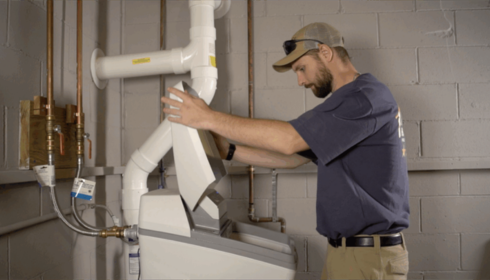
That’s where a point of entry softener comes in. Installed where water enters your home, it treats all incoming water before it flows to your taps, appliances, and fixtures.
It’s a comprehensive approach. Instead of fixing problems in different areas, you’re addressing the source itself.
And the impact is surprisingly wide-reaching.
From your washing machine to your dishwasher, from your shower to your kitchen sink — everything benefits from water that’s been softened at the start.
The Subtle Improvements You Start to Notice
What’s interesting is that the benefits don’t always feel dramatic at first.
Your appliances don’t suddenly become brand new. Your pipes don’t magically transform overnight.
But things start to feel smoother.
Your washing machine runs more efficiently. Your water heater maintains temperature more consistently. You notice fewer issues, fewer maintenance needs, fewer small frustrations.
And over time, that consistency becomes noticeable.
Saving More Than Just Repairs
When appliances last longer, you save money. That part is obvious.
But there’s more to it than just avoiding replacements.
Energy efficiency improves when systems aren’t struggling against buildup. You use less detergent, less cleaning product, less effort overall.
It’s not one big saving — it’s a collection of smaller ones that add up over time.
And perhaps more importantly, it reduces stress. You’re not constantly fixing, cleaning, or replacing things.
Your home just works the way it should.
Why We Often Miss the Connection
The tricky thing about water-related issues is that they don’t always feel connected.
A slow-heating geyser. A dishwasher that leaves spots. A washing machine that doesn’t seem as effective.
Individually, these seem like separate problems.
But when you step back, you start to see the common thread.
Water touches everything. And when it’s carrying minerals that interfere with performance, the effects show up in different places.
Once you recognize that connection, the solution becomes clearer.
Keeping It Practical
You don’t need to become an expert in water chemistry to improve your situation.
Start by paying attention to the signs. Scale buildup, reduced efficiency, frequent maintenance — these are all indicators that your water might be working against you.
From there, it’s about choosing a solution that fits your home.
Sometimes, a whole-home approach makes sense. Other times, smaller, targeted solutions are enough.
The key is not overcomplicating it.
A Home That Feels Easier to Maintain
There’s something satisfying about a home that doesn’t constantly demand attention.
Appliances that work reliably. Fixtures that stay cleaner longer. Systems that run efficiently without extra effort.
Improving water quality contributes to all of that.
It’s not something you think about every day. But when it’s right, you notice the absence of problems more than anything else.
Coming Back to the Basics
At its core, this isn’t about technology or upgrades.
It’s about making your home function the way it’s meant to.
Water should support your daily life, not complicate it. Your appliances should work efficiently, not struggle quietly behind the scenes.
And when you address the quality of your water, everything else starts to fall into place.
Because sometimes, the biggest improvements come from fixing the things you don’t immediately see — the ones working quietly in the background, every single day.